7 Best Backlit Letters for Global Buyers

Time:2026-09-06 Author:Oliver
0%

Choosing the right Backlit Letters can transform a storefront, hotel lobby, or corporate entrance after sunset. The glow should be clear, even, and easy to read from the intended viewing distance. Yet appearance is only part of the decision. Global buyers must also compare materials, LED quality, power requirements, mounting methods, weather resistance, and shipping conditions.

This guide explores seven practical Backlit Letters options for different commercial environments. It considers stainless steel, aluminum, acrylic, painted finishes, halo illumination, face illumination, and custom-built designs. Each option offers a different balance of brightness, durability, maintenance, and budget. Small details matter. A poorly sealed letter can collect moisture. Uneven LED spacing may create dark patches across the face. A thin metal edge can also bend during installation or transport.

Real project experience often reveals what product descriptions miss. A warm-white glow may suit a restaurant, while cool-white lighting can support a modern office identity. Outdoor installations need careful attention to drainage, cable protection, and local electrical requirements. Buyers should request samples, drawings, warranty details, and clear production specifications before approving an order.

No single option wins every project. That is worth remembering. Some recommendations may look ideal online but perform differently in coastal air, heavy rain, or extreme temperature changes. By comparing these seven choices carefully, buyers can select illuminated lettering that supports brand visibility, installation confidence, and long-term value across international markets.
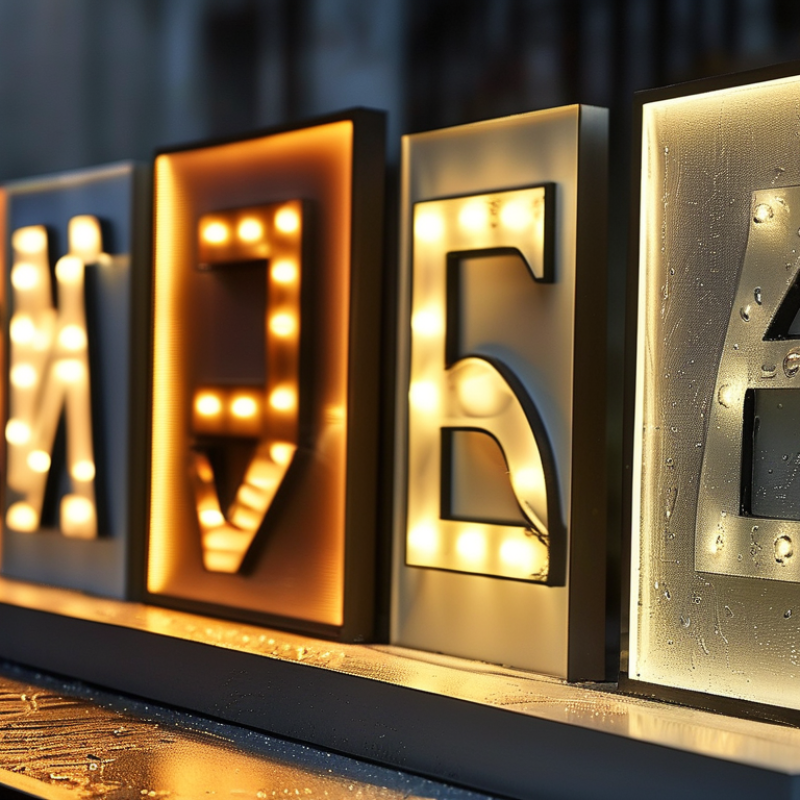
7 Best Backlit Letters for Global Buyers

What Backlit Letters Are and How They Work

7 Best Backlit Letters for Global Buyers

Backlit letters are three-dimensional signs with built-in LED lighting. Their faces usually use acrylic, polycarbonate, or another light-diffusing material. The LEDs sit inside each letter and spread light across the front surface. Some designs also direct light onto the wall, creating a soft halo effect.

The result is readable branding after sunset. It also adds depth to a flat facade. In practical sign planning, spacing matters as much as brightness. Letters placed too closely can create uneven shadows. Excessive brightness may cause glare, especially near entrances or dark streets. LED modules, power supplies, wiring, and mounting frames must work as one system. Weather-resistant construction is important for outdoor applications. Still, “weatherproof” does not mean maintenance-free. Dust, moisture, and loose connections can eventually reduce performance.

Tips: Confirm voltage, dimensions, lighting color, and mounting details before production. Request a lighting sample when possible. Check the installation surface carefully. A small wall irregularity can make precise letters look misaligned. Use appropriate sealing and drainage for exposed locations. Select a qualified installer who understands local electrical requirements. Energy use is usually modest, but poor wiring can create avoidable service problems. One detail is easy to overlook: replacement access. If an LED module fails, technicians should reach it without damaging the letter face. That planning may cost more initially, yet it can prevent expensive repairs later.

Seven Leading Backlit Letter Styles for International Buyers

International buyers can choose seven leading backlit letter styles: halo-lit, front-lit, dual-lit, edge-lit, reverse-channel, acrylic-faced, and stainless-steel-faced letters. Halo-lit letters create a soft glow behind metal bodies. Front-lit letters use illuminated acrylic faces for strong daytime visibility. Dual-lit designs combine both effects. Edge-lit letters suit sleek interiors and narrow profiles. Reverse-channel letters deliver a refined architectural outline. Acrylic-faced letters appear brighter and more colorful. Stainless-steel-faced letters offer a durable, premium appearance.

The U.S. Department of Energy reports that LED lighting uses at least 75% less energy than incandescent lighting and lasts up to 25 times longer. That matters for hotels, retail façades, airports, and international projects with high operating hours. Grand View Research valued the global LED lighting market at approximately 78.5 billion dollars in 2022, with continued growth expected through 2030. These figures support LED-based lettering, but they do not guarantee every installation will perform equally. Heat, moisture, voltage, and poor drainage still cause failures. I have seen attractive samples lose brightness when installers ignored ventilation.

Tips: Match the letter style to viewing distance, climate, and wall material. Ask for IP-rated components, measured brightness, power consumption, and photometric data. Confirm local voltage before production. Request a physical color sample. Digital previews can mislead. For coastal sites, marine-grade finishes may justify the higher cost, although specifications should be verified independently.

Key Materials, Lighting Options, and Design Features

7 Best Backlit Letters for Global Buyers

Backlit letters succeed when materials, lighting, and mounting work as one system. Acrylic faces provide even color and clean edges, while aluminum returns reduce weight and resist outdoor moisture. Stainless steel adds a crisp, premium surface, but fingerprints and glare need attention. Polycarbonate is tougher for busy public areas, although its finish may look less refined. Not every shiny surface performs well.

Lighting choice changes readability and operating cost. Standard white LEDs suit most corporate and retail signs. Warm white creates a softer hospitality mood. RGB systems support changing colors, but they add controllers, wiring, and maintenance points. Edge lighting creates slim, elegant letters. Halo lighting produces a visible glow behind each character. Diffusers and tested LED spacing help prevent bright spots. A sample panel should be viewed at night, not only in a showroom.

Global buyers should check input voltage, heat management, drainage, cable access, and installation requirements. Sealed modules help in wet climates, yet sealing alone cannot fix poor drainage. Choose return depths that match viewing distance and wall texture. Deep letters can disappear on dark brick. Thin letters may lose impact across a wide plaza. Reliable designs often use replaceable modules and clear wiring labels. Visual mockups can hide shadows, uneven walls, and color shifts. Ask for night photos, material samples, and a maintenance plan before approving production.

7 Best Backlit Letters for Global Buyers - Key Materials, Lighting Options, and Design Features

Typical visible-light transmission of commonly used face materials for illuminated letters. Values are representative midpoints of published material ranges and vary with thickness, finish, diffusion, and color.

Design insight: Clear acrylic and glass provide the highest light transmission, while opal, frosted, fabric, and translucent PVC faces diffuse light more evenly and help reduce visible LED hotspots. White LED modules are commonly selected for neutral illumination, while RGB LED systems support dynamic color effects.

How to Choose Backlit Letters for Different Business Needs

7 Best Backlit Letters for Global Buyers

How to Choose Backlit Letters for Different Business Needs

Choosing backlit letters starts with the business environment, not appearance alone. Retail stores often need bright, readable signage from a busy sidewalk. Hotels may prefer softer illumination for a refined entrance. Offices usually benefit from clean shapes and controlled brightness. For outdoor use, check weather resistance, drainage, mounting strength, and cable protection. Aluminum, acrylic, stainless steel, and coated metal each create different visual effects. The best choice depends on location, viewing distance, climate, and daily operating hours.

Tips: Measure the wall first. Confirm letter depth, power requirements, color temperature, and installation access. Ask for lighting samples before approving production. Warm light can feel welcoming, while cool light may improve visibility. Local electrical requirements also deserve professional review.

From practical installation experience, even attractive letters can fail when the mounting surface is ignored. Uneven walls may create shadows behind the characters. Strong sunlight can reduce daytime contrast. I once underestimated the effect of viewing distance, and the thinner lettering looked weak from across the street. That mistake changed my selection process. Compare nighttime photos, material samples, warranties, and maintenance access. Also consider replacement parts and shipping protection for international orders. A slightly higher initial cost may reduce future repairs, but this is not guaranteed. Evaluate the full service life, not only the purchase price.

Installation, Maintenance, and Global Purchasing Considerations

7 Best Backlit Letters for Global Buyers

Choosing the best backlit letters involves more than brightness. Halo-lit, face-lit, edge-lit, channel, acrylic, stainless-steel, and dual-lit letters suit different façades and climates. The U.S. Department of Energy reports that LED systems use at least 75% less energy and last up to 25 times longer than incandescent lighting. That advantage matters for retail streets, airports, and hotels operating for long hours.

Installation quality decides real performance. Use corrosion-resistant fasteners, sealed cable entries, and drainage paths behind each letter. Keep the transformer accessible, not trapped inside a sealed wall. IEC 60529-rated enclosures can help buyers compare protection against dust and water, but the rating must match local exposure. A coastal site needs stronger corrosion control than an indoor lobby. Small details matter. Leave service clearance around power supplies and inspect mounting points after strong wind.

Maintenance should include quarterly cleaning, cable checks, and brightness testing across the full sign. The International Energy Agency has reported that lighting represents about 15% of global electricity consumption, so efficient maintenance has measurable value. Global buyers should request photometric files, voltage compatibility, spare-module availability, packaging dimensions, and installation drawings. Confirm customs documents and electrical certifications before payment. I have seen attractive specifications fail because replacement parts were unavailable locally. That mistake is easy to repeat. A lower purchase price may create higher downtime, especially when installers lack familiar components.

7 Best Backlit Letters for Global Buyers - Installation, Maintenance, and Global Purchasing Considerations

A practical comparison of commonly specified illuminated letter formats. Performance figures are typical planning ranges and should be confirmed against the final design, climate, certification, and installation conditions.

Backlit Letter Type Typical Construction Recommended Face / Return Materials Typical Depth Lighting Effect Typical Power Demand Outdoor Protection Installation Method Maintenance Requirements Global Purchasing Considerations Best Use Cases
1. Halo-Lit Channel Letters Opaque metal or acrylic face with rear-facing LEDs that create a glow on the mounting surface. Aluminum or stainless-steel return; opaque aluminum, acrylic, or painted metal face. 75–150 mm Soft reverse halo or wall-wash illumination. Approximately 8–18 W per letter, depending on size and LED spacing. IP65–IP67 target
Use sealed modules, cable entries, and drainage where exposed to rain.
Stud-mounted individually onto a template, or fixed to a fabricated backer panel. Clean faces and wall surfaces; inspect LED modules, cable glands, and power supplies annually. Confirm wall color and texture, mounting template accuracy, local electrical rules, and the input voltage required by the power supply. Premium façades, hotels, offices, retail entrances, and locations requiring a refined nighttime appearance.
2. Face-Lit Channel Letters Three-dimensional letters with LEDs directed toward a translucent front face. Aluminum returns with acrylic, polycarbonate, or translucent aluminum composite face. 75–125 mm Bright, direct illumination with strong daytime visibility. Approximately 10–25 W per letter, influenced by face area and brightness level. IP65–IP67 target
Use UV-stable faces and corrosion-resistant fasteners for exterior projects.
Individual studs, concealed rails, or a shared raceway/backer depending on letter size. Wash the face with non-abrasive detergent; replace failed LED modules and check power supplies. Specify UV resistance, color consistency, flame rating where applicable, export packaging, and replacement-module availability. Shopping centers, roadside signs, commercial buildings, and high-visibility storefront signage.
3. Open-Face Acrylic Letters Exposed LED modules mounted inside a letter body without a closed front face. Aluminum or acrylic body with exposed LED modules and protective internal wiring. 50–100 mm Direct point-source illumination with a more industrial or retro character. Approximately 6–18 W per letter. IP65 minimum target
Use outdoor-rated modules and drainage; exposed LEDs require careful sealing.
Direct stud mounting or installation on a continuous backboard. Remove dust and insects from the interior; check exposed modules, wiring, and water drainage regularly. Confirm whether exposed LEDs meet local safety and ingress requirements; protect components during sea or air freight. Entertainment venues, restaurants, creative interiors, event spaces, and retro-style exterior signs.
4. Edge-Lit Acrylic Letters Clear or translucent acrylic shaped with routed edges and illuminated by LEDs positioned along the edge. Cast acrylic, laser-cut acrylic, aluminum support plates, and concealed LED strips or modules. 10–30 mm Fine-line glow with a lightweight, contemporary appearance. Approximately 4–12 W per letter. IP44–IP65 target
IP44 may suit interiors; exterior versions require sealed components and protected connections.
VHB-type adhesive, concealed clips, studs, or a rear mounting plate, according to size and substrate. Use a soft cloth and non-solvent cleaner; avoid abrasive products that can scratch acrylic edges. Verify acrylic thickness, color transmission, optical uniformity, thermal expansion allowances, and packaging against scratching. Interior walls, reception areas, galleries, modern retail environments, and protected entrance zones.
5. Front-and-Halo-Lit Letters Combined construction using a translucent front face and rear illumination for a dual lighting effect. Aluminum or stainless-steel return with translucent acrylic face and opaque rear components. 80–160 mm Direct face illumination plus a visible rear halo. Approximately 12–30 W per letter. IP65–IP67 target
Separate front and rear light paths should be sealed and tested independently.
Stud-mounted letters or a prefabricated panel with concealed wiring. Clean both face and wall area; inspect two lighting circuits, drivers, and drainage points. Confirm independent circuit control, total load, dimming compatibility, wall clearance, and local restrictions on nighttime brightness. Flagship stores, hospitality projects, corporate entrances, and premium architectural signage.
6. LED Neon-Style Letters Flexible LED neon tubing or molded LED strips arranged along letter strokes and mounted on a backing panel. UV-stable silicone or PVC diffuser, aluminum backing, acrylic support, and weather-resistant connectors. 20–60 mm Continuous, smooth line of light with minimal visible hotspots. Approximately 8–20 W per metre of illuminated tubing. IP65–IP67 target
Use fully sealed tubing and outdoor-rated connectors for exterior installations.
Mounted on an acrylic or metal backboard using clips, channels, or concealed fasteners. Clean the diffuser; inspect clips, joints, connectors, and low-voltage power supplies for heat or moisture damage. Specify tubing diameter, bend radius, cut increments, color temperature, voltage, connector type, and spare sections. Restaurants, bars, entertainment venues, decorative façades, exhibitions, and branded interior features.
7. Stainless-Steel Halo Letters Fabricated stainless-steel letters with concealed rear LEDs and a controlled gap from the mounting surface. 304 stainless steel for general conditions; 316 stainless steel for marine or high-salt environments. 50–120 mm Sharp, elegant halo effect with strong resistance to surface corrosion when correctly specified. Approximately 7–18 W per letter. IP65–IP67 target
Use suitable steel grade, isolated fixings, sealed wiring, and drainage in coastal areas.
Threaded studs, concealed brackets, or a precision mounting rail. Rinse salt and pollutants from the surface; use stainless-compatible cleaner and inspect for galvanic corrosion. Choose the steel grade by environment, confirm brushed or mirror finish, require protective film for transport, and check customs classification for illuminated signage. Coastal buildings, luxury developments, corporate headquarters, airports, and high-end hospitality projects.
Purchasing checklist: Confirm approved drawings, letter dimensions, stroke width, color temperature, brightness, operating voltage, total wattage, power-supply quantity, IP rating, cable length, mounting template, spare parts, packaging method, installation hardware, inspection documents, and destination-country electrical compliance before placing an international order.

FAQS

: What are the main styles of backlit letters?

: Common styles include halo-lit, front-lit, dual-lit, edge-lit, reverse-channel, acrylic-faced, and stainless-steel-faced letters. Each creates a different visual effect.

Which style suits a soft architectural appearance?

Halo-lit letters create a gentle glow behind metal bodies. Reverse-channel letters produce a refined outline around each character. They often suit hotels and polished entrances.

Which letters provide stronger daytime visibility?

Front-lit letters use illuminated acrylic faces. They usually remain easier to read from busy sidewalks. Acrylic-faced letters can also appear brighter and more colorful.

Are dual-lit letters suitable for demanding visual effects?

Yes. Dual-lit designs combine front illumination and rear halo lighting. They offer stronger presence during both day and night. The effect may become excessive on small walls.

How should buyers choose letters for outdoor locations?

Check weather resistance, drainage, mounting strength, and cable protection. Ask for IP-rated components and verified material specifications. Coastal sites may need marine-grade finishes.

What information should international buyers request before production?

Request measured brightness, power consumption, photometric data, and color temperature. Confirm local voltage before manufacturing begins. Ask for physical color samples.

How does the wall affect backlit lettering?

Uneven walls can create unwanted shadows behind the characters. Measure the surface and confirm installation access. A beautiful sample may fail on a poor mounting surface.

Do LED letters reduce operating costs?

LED lighting generally uses much less energy than incandescent lighting. It can also last considerably longer. Real performance still depends on heat, moisture, voltage, and ventilation.

How should viewing distance influence the design?

Measure the distance from the sign to approaching viewers. Thin lettering may look weak across a wide street. I once underestimated this detail. The mistake changed my selection process.

Is the lowest purchase price always the best choice?

Not always. Compare service life, warranties, replacement parts, maintenance access, and shipping protection. A higher initial cost may reduce repairs. That result is not guaranteed.

Conclusion

Backlit Letters are dimensional signage elements that use internal or rear-mounted lighting to create a clear, attractive glow around or through each letter. This article introduces seven practical styles for international buyers, including front-lit, halo-lit, edge-lit, face-lit, channel, acrylic, and metal options. It explains how materials such as aluminum, stainless steel, acrylic, and composite panels affect durability, appearance, and cost, while comparing LED lighting choices, color temperatures, brightness levels, and energy efficiency.

The guide also shows how to select Backlit Letters for storefronts, offices, hotels, retail spaces, and large outdoor facilities according to branding, visibility, climate, and installation conditions. It covers essential purchasing considerations, including dimensions, electrical compatibility, packaging, shipping, warranties, and supplier communication across regions. Finally, readers will learn about mounting methods, weather protection, routine cleaning, LED inspection, and maintenance planning to help preserve sign performance and appearance over time.


Oliver

Oliver

Oliver is a seasoned marketing professional with a wealth of expertise in driving brand awareness and engagement. With a deep understanding of our company's product offerings, he consistently delivers high-quality content that enriches our professional blog. His insights not only shed light on......